
How Many Amps Does a Level 2 EV Charger Need? A Yorba Linda Sizing Guide
Most Level 2 home chargers run at 32, 40, or 48 amps, and that number decides the breaker, the wire, and how fast your car fills up overnight. Here is how to size it for a Yorba Linda home.
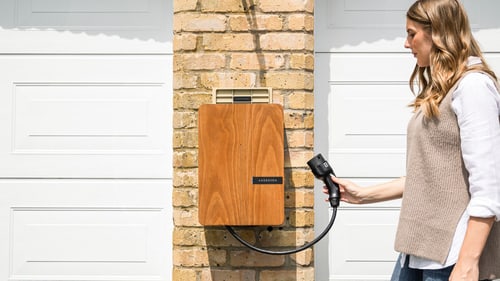
How many amps does a Level 2 EV charger need? For most Yorba Linda households the answer is a 40-amp or 48-amp charger, though a 32-amp unit is plenty for a lot of drivers. Level 2 charging runs on a 240-volt circuit, the voltage tier the Alternative Fuels Data Center describes for home equipment, and the amperage rating is what separates a charger that adds a few miles an hour from one that refills a commuter's battery while you sleep. The catch is that the number on the charger is never the number on the breaker, and choosing the right amperage means weighing three things at once: your car, your daily driving, and the electrical panel feeding the house.
- Most Level 2 home chargers are rated 32, 40, or 48 amps, and 48 amps is the practical ceiling for a residential hardwired unit.
- Amperage is a continuous load, so the National Electrical Code requires the circuit behind the charger to be sized about 25 percent larger: a 48-amp charger needs a 60-amp breaker.
- Higher amps add range faster, but a charger can only deliver what the car will accept and what the panel can safely spare.
- Stepping up to 48 amps often triggers a panel check or a load calculation, especially on an older 100- or 125-amp service.
- The right amperage is the one your panel can support and your driving actually needs, not simply the biggest number on the shelf.
How Many Amps a Level 2 EV Charger Needs Depends on Three Things
A Level 2 EV charger needs enough amperage to match your car's onboard charger, your overnight driving demand, and the spare capacity of your electrical panel, which for most homes lands at 32, 40, or 48 amps. The charger only delivers what the slowest link allows: a 48-amp unit paired with a car that accepts 32 amps still charges at 32, and a 48-amp unit on a panel that cannot spare the capacity should not be installed at all. Most current EVs accept between 32 and 48 amps of AC charging, which is why a 40-amp charger is the common middle ground that suits the majority of vehicles without pushing a panel to its edge.
The 80 Percent Rule Decides the Breaker Behind the Charger
EV charging is a continuous load, and the National Electrical Code treats continuous loads differently from the toaster or hair dryer that runs for a few minutes. A continuous load, meaning one that draws current for three hours or more, may use no more than 80 percent of its circuit's rating, which is the same thing as saying the circuit must be sized to 125 percent of the charger's draw. That single rule is why the amperage printed on the charger is never the amperage stamped on the breaker.
The arithmetic is simple once you see it. A 48-amp charger is 80 percent of 60, so it needs a 60-amp breaker, which is exactly what Tesla specifies for its 48-amp Wall Connector. A 40-amp charger needs a 50-amp breaker, and a 32-amp charger needs a 40-amp breaker. The wire inside the wall is sized to the breaker rather than the charger, so a 48-amp install pulls heavier copper than a 32-amp one even though both plugs look identical from the driveway.
Breaker and Wire Size for 32-, 40-, and 48-Amp Chargers
Each amperage tier pairs with its own breaker and a minimum copper wire gauge, and the gap between those tiers is where a lot of the installation cost lives.
- 32-amp charger: a 40-amp breaker, commonly wired with 8-gauge copper. It can plug into a 240-volt outlet or hardwire, and it covers a typical commuter comfortably.
- 40-amp charger: a 50-amp breaker, usually 8- or 6-gauge copper depending on the length of the run. A balanced middle choice for most single-vehicle households.
- 48-amp charger: a 60-amp breaker and heavier 6-gauge copper, and it must be hardwired rather than plugged into an outlet. This is the fastest tier most homes will ever install.
Those gauges are starting points, not guarantees. Aluminum conductors, a long pull from the panel to the garage, and high attic temperatures can each bump the required wire up a size, which is why a licensed electrician sizes the conductor to your actual route instead of a generic chart. Heavier wire and a longer run are the main reasons a 48-amp job costs more than a 32-amp one, long before anyone touches the panel.
Whatever amperage you land on, look for an ENERGY STAR label on the charger: certified models are safety-tested by a nationally recognized laboratory and use roughly 40 percent less energy in standby than uncertified units.
Faster Charging Is What the Extra Amps Actually Buy
Not Sure Your Panel Can Handle 48 Amps?
Tell us the EV you drive and send a photo of your electrical panel, and we will tell you the charger amperage your Yorba Linda home can actually support -- and what the circuit will take.
Instant QuoteThe practical payoff of higher amperage is miles of range added per hour. A typical Level 2 charger adds about 10 to 20 miles of range per hour, according to ENERGY STAR, and units wired to a 50-amp circuit charge even faster. At the top of the residential range, Tesla rates its 48-amp Wall Connector at 11.5 kW and 30 to 44 miles of range per hour depending on the vehicle. Whether that speed is worth a heavier circuit comes down to how far you drive in a day.
For a Yorba Linda household putting 30 to 40 miles on the odometer daily, even a 32-amp charger replaces that range in a couple of hours overnight, long before the alarm goes off. A two-EV garage, a long-range truck with a big battery to top off, or a driver who skips a night of charging now and then is where 40 or 48 amps earns its keep, because the extra speed turns a missed plug-in into a non-event. Buying more amperage than your driving calls for mostly buys a bigger invoice for the install.
When a 48-Amp Charger Needs a Panel Check or Load Calculation
A 48-amp charger needs a panel check whenever adding a 60-amp circuit might push the home's total demand past what the main service can carry, and on plenty of Yorba Linda homes it will. An electrician runs a load calculation, a standardized tally of the home's existing electrical demand plus the new charger, to confirm the service has room before any wire is pulled. Older homes on a 100-amp panel frequently do not have 60 spare amps once the air conditioning, electric range, and the rest of the house are counted, while a newer 200-amp service usually does.
This is where the choice between 32, 40, and 48 amps often gets made for you. A panel that cannot support 48 amps may comfortably handle a 40- or 32-amp charger, and dropping a single tier can be the difference between a clean afternoon install and a full electrical panel upgrade. Load management devices are another path, since they let a larger charger share capacity with the rest of the house, but the starting point never changes: a real look at the panel before anyone orders hardware.
What Amperage Makes Sense for a Yorba Linda Home
Southern California Edison is the utility serving Yorba Linda, and the right amperage here is shaped as much by the house as by the car. The city's large-lot single-family homes often sit the garage a long way from the main panel, and a long wire run is exactly where a 48-amp circuit gets expensive, because more distance means heavier, costlier copper to hold the voltage up across the length of the pull. On a big lot, that run length can move the final bill more than the charger itself does.
The age of the home is the other variable. Newer developments on the east side of Yorba Linda tend to come with 200-amp service that takes a 48-amp charger in stride, while older homes nearer the core were often built around 100- or 125-amp panels that a 48-amp circuit can overwhelm. SCE's Charge Ready Home program offers rebates of up to $500, or $1,500 with a dedicated EV meter, toward the 240-volt circuit and Level 2 charger when a licensed electrician does the work, which takes some of the sting out of sizing the circuit correctly the first time.
Start With the Panel, Then Pick the Amps
The amperage question tends to answer itself once two numbers are on the table: what the panel can safely supply, and how far the car really travels in a day. If you drive average miles and want the simplest, cheaper install, a 32- or 40-amp charger is usually the smart call; if you run two EVs or a big-battery truck and the panel has the headroom, 48 amps buys overnight speed you will actually use. The one order that never changes is to check the service first, because sizing the charger before anyone knows what the panel can carry is how an install stalls halfway through.
If you are weighing 40 against 48 amps for your own house, or you suspect an older panel is the real limit, that is the call to hand to a local pro who runs the load calculation before quoting hardware. Yorba Linda EV Charger can size the circuit as part of a Level 2 EV charger installation and handle any electrical panel upgrade the service turns out to need.