
Are Smart EV Chargers Worth It? A Guide for Yorba Linda Homeowners
Smart EV chargers cost more than basic ones, sometimes a lot more, and the obvious question is whether the app and the Wi-Fi actually earn that premium for a Yorba Linda home.
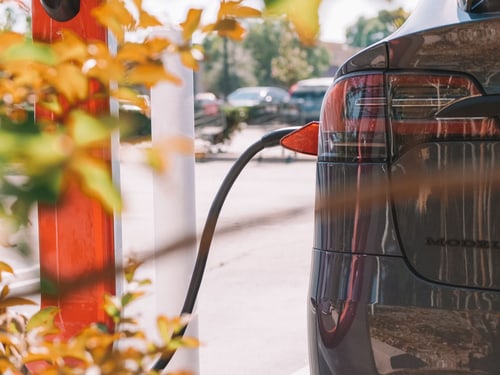
Smart EV chargers cost more than basic ones, sometimes a lot more, and the obvious question for a Yorba Linda homeowner is whether the app and the Wi-Fi actually earn that premium. The honest answer is that it depends on how you charge and what your car already does on its own. A connected charger can genuinely save money and hassle for some households and be wasted money for others, and the difference comes down to a few specific habits. This guide explains what a smart charger really does, where it pays off on a Southern California Edison plan, and when a simpler unit is the smarter buy.
What a Smart EV Charger Actually Does
A smart, or connected, charger is one that talks to your home network and a phone app, rather than just delivering power when plugged in. ENERGY STAR notes that some certified models are connected, also referred to as networked, which enables remote monitoring and control of charging. In practice that means scheduling charging for specific hours, tracking how much energy each session used, adjusting the charging rate, receiving status alerts, and in some cases sharing power between two chargers. A basic charger does none of this; it simply charges at full rate whenever the car is connected. The hardware that delivers the electricity is nearly identical between the two, so what you pay extra for is the software and the connectivity, and the real question is whether you will use them.
Where a Smart Charger Saves You Money
The clearest payoff is scheduling your charging onto cheap power. Southern California Edison's time-of-use plans are built to reward charging during off-peak hours, and a smart charger can be set to wait until that low-rate window opens every night without you thinking about it. There is a second, smaller saving: ENERGY STAR reports that certified chargers use 40 percent less energy in standby mode, and since a charger sits idle most of the day, that adds up over years. Connected, smart-grid-ready models may also make a household eligible for utility bill-savings and demand-response programs, which can pay you to shift charging when the grid is strained. For a driver on a TOU plan who charges most nights, these savings are real and recurring.
The Features Actually Worth Paying For
Not every smart feature matters equally. These are the ones that tend to justify the price for a Yorba Linda home:
- Automatic off-peak scheduling, so every charge lands on SCE's cheapest rate without manual effort.
- Energy tracking, so you can see exactly what charging adds to your bill each month.
- Load management or power sharing, which lets two EVs share one circuit or keeps a charger from overloading a tight panel.
- Demand-response enrollment, where the utility may pay you to shift charging during peak events.
- Remote start, stop, and status alerts, useful if the charger is on a timer or shared by a household.
- Firmware updates over Wi-Fi, so the charger can gain features or fixes after you buy it.
Will a Smart Charger Work With SCE's Programs?
If utility incentives are part of your reasoning, the charger has to be the right kind. ENERGY STAR explains that some certified chargers offer demand-response capability through open communication protocols, which is what lets a utility program talk to the unit. A connected, separately metered charger can also show the utility when and how long you charge, which is often a requirement to enroll in an EV rate or rebate. If you plan to join an SCE program, confirm the specific model is listed as compatible before you buy, because a generic Wi-Fi charger is not automatically eligible. For many Yorba Linda homeowners the program savings, not the app convenience, are what finally make a smart charger pencil out.
Charging Two EVs? Smart Load Management Earns Its Keep
If you have two EVs, or expect to, this is where a smart charger clearly pays off. Load management and power sharing let two cars draw from one circuit without overloading the panel, with the charger automatically splitting or sequencing the power overnight. That can avoid running a second circuit or even a panel upgrade, which is a real dollar saving rather than just convenience. A basic charger cannot do this; it delivers full power whenever a car is plugged in, so two of them on a tight panel is a recipe for tripped breakers. For a two-EV Yorba Linda household on 100-amp or a modest 200-amp service, smart load management is often the feature that makes home charging workable at all.
Not Sure Which Charger Fits How You Drive?
Tell us your car, your SCE plan, and whether you have one EV or two, and we will tell you whether a smart charger earns its price for you, and size the circuit it needs.
Instant QuoteWhen a Basic Charger Is the Smarter Buy
A smart charger is not automatically the right call, because much of what it does, your car may already do. Most modern EVs have built-in charge scheduling in the car's own app or dashboard, so you can charge on off-peak power with a basic, cheaper charger and let the vehicle handle the timing. If you drive a single EV, charge once a day, and are comfortable setting a schedule in the car, a simple unit can deliver the same bill savings for less money. The same is true if your parking spot has poor Wi-Fi, since a connected charger that cannot stay online loses its main advantage. In those cases the extra spend buys features you will not use.
Before paying for a smart charger, check whether your EV already schedules charging on its own. Most newer cars do, which means you can often capture the same off-peak savings with a basic charger and let the vehicle handle the timing.
What a Smart Charger Costs Versus a Basic One
Expect to pay a premium for the connectivity. Industry pricing puts a basic Level 2 charger in the rough range of $200 to $400, while a connected smart model more often runs $400 to $800, with the installation cost roughly the same either way. Whether that gap pays back depends entirely on use: a driver who schedules every charge to off-peak power and enrolls in a utility program can recover it over a few years, while someone who would let the charger run whenever may never see the difference. Judge the premium against the features you will actually use, not the full feature list printed on the box.
What Matters More Than the App: Safety and Sizing
Whatever you decide on connectivity, two things matter more than any feature. The first is safety: ENERGY STAR notes that all certified chargers are tested for safety by a nationally recognized testing laboratory, which is worth looking for on any unit, smart or not. The second is sizing. A charger has to match your car's acceptance rate and your panel's capacity, and a properly sized, permitted Level 2 EV charger installation does far more for your daily charging than any app. A smart charger on an undersized circuit is still a slow charger. Get the amperage and the circuit right first, then decide whether the smart features are worth it on top.
So, Are Smart Chargers Worth It for Your Home?
A smart charger earns its premium when you are on a time-of-use plan and will actually use scheduling, when you want utility demand-response savings, or when two EVs need to share one circuit through load management. It is money wasted when your car already schedules charging, you drive lightly, or the connection would be unreliable where you park. The deciding question is not whether smart chargers are good; it is whether you will use the parts you are paying for. If you want help matching the charger and the circuit to how you actually drive, Yorba Linda EV Charger can size the equipment and handle a permitted Level 2 installation, smart or basic, from the home page.